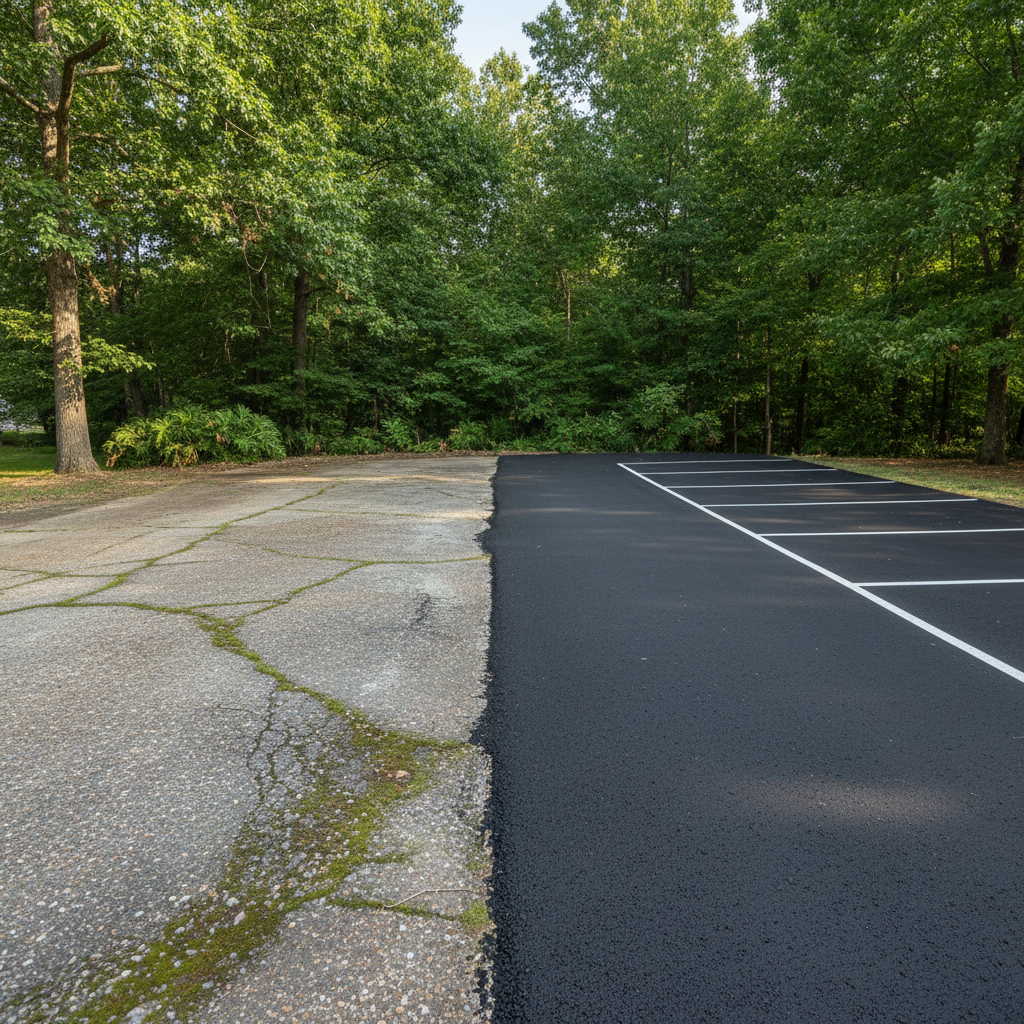
Alright, let's talk stripes. You've got a fresh coat of asphalt down, or maybe you're just sprucing up an older one, and now you're thinking about those crisp lines for parking, basketball courts, or whatever else you need them for. When it comes to putting down those lines, you've generally got two main options: specialized striping tape or good old-fashioned paint. I see folks debating this all the time, so let's cut through the noise and figure out what makes sense for your Bentonville property.
The Case for Asphalt Striping Paint
This is probably what first comes to mind when you think about lines on asphalt. It's the traditional method, and for good reason, too. We've been using paint for decades, and frankly, it just works.
- Cost: Generally, paint is the more budget-friendly option upfront. The materials themselves are cheaper, and while applying it well needs skill and specific equipment (like a proper line striper to get those clean edges), the overall cost per linear foot usually comes in lower than tape. If you're doing a big parking lot, this difference can really add up, you know?
- Durability: A good quality traffic paint, put down correctly on a clean, dry surface, can last a long time. We're talking several years, especially if it's a high-quality acrylic or epoxy-based paint made for heavy traffic. The trick here is proper application and using the right kind of paint for asphalt. You can't just slap on house paint and expect it to hold up to tires and weather.
- Maintenance: When paint starts to fade or chip, you can usually just re-stripe right over the old lines after a good cleaning. It's a pretty straightforward process to refresh them.
- Appearance: You can get incredibly crisp, sharp lines with paint. Plus, there's a wider range of colors available if you're looking for something beyond just white or yellow. For parking lots or athletic courts, paint gives you that professional, clean look that's hard to beat.
Now, paint isn't without its downsides. It takes time to dry, which means you've got to block off the area for a bit. And if it's humid or we get one of those sudden spring showers we're known for here in Northwest Arkansas, that can mess with drying times and adhesion. Plus, if the surface isn't prepped right, paint can peel or flake prematurely.
The Lowdown on Asphalt Striping Tape
This is a newer player in the game, especially for residential and lighter commercial applications. Think of it like a giant, super-durable sticker that adheres to your asphalt.
- Cost: This is where tape usually loses out on the initial investment. The material cost for striping tape is significantly higher than paint. Because of that, it's often considered for smaller, more specific jobs rather than sprawling parking lots, if that makes sense.
- Durability: This is where tape shines for some folks. High-quality striping tape is designed to be incredibly tough. It's often reflective, which is a nice bonus for visibility at night. It's engineered to stand up to traffic, UV rays, and our sometimes harsh Bentonville weather cycles, from freezing winters to scorching summers. Some tapes boast a lifespan that can even exceed paint, especially in areas with less abrasion.
- Maintenance: If a section of tape gets damaged, you can usually just cut out the bad part and lay down a new piece. No drying time needed. However, if the edges start lifting, it can become a tripping hazard or look pretty shabby. Preventing that lifting is all about proper surface prep and application.
- Appearance: Tape gives you an instant, perfectly uniform line. There's no bleed, no brush strokes, just a clean, solid stripe right away. The reflective properties of some tapes can also make your lines pop, especially after dark.
The biggest challenge with tape is making sure it adheres perfectly. The asphalt needs to be extremely clean and dry. Any dust, oil, or moisture, and that tape isn't going to stick long-term. And once it's down, it's down. Adjustments are a pain, so precision is key. Also, if your asphalt surface is really rough or uneven, tape can struggle to conform and seal properly, leading to early failure.
My Recommendation for Bentonville Homeowners
For most homeowners in Bentonville looking to stripe a driveway, a basketball court, or even a small private parking area, I'm going to lean towards paint. Here's why:
First, the cost. You're simply going to get more bang for your buck with paint. You can achieve a professional, durable finish without the premium price tag of tape. Second, the flexibility. If you decide to change your layout down the road, or if a line gets scuffed, repainting is generally easier and more forgiving than trying to remove or replace tape.
Now, there are exceptions. If you absolutely cannot afford any downtime for drying, or if you need highly reflective lines for safety reasons in a very specific, low-traffic area, tape might be worth considering. But for the vast majority of residential applications, a good quality traffic paint applied by someone who knows what they're doing is the superior choice.
We've seen countless driveways in neighborhoods like Central Park and Apple Blossom, and paint just holds up beautifully when done right. It handles the freeze-thaw cycles, the heavy vehicle traffic, and the general wear and tear of daily life without a fuss. Apex Paving Solutions always uses high-grade paints and proper application techniques to ensure your stripes look great and last.
Ultimately, it comes down to your specific needs, budget, and what kind of look and longevity you're after. But if you ask me, for most folks around here, paint is still the champ for asphalt striping.