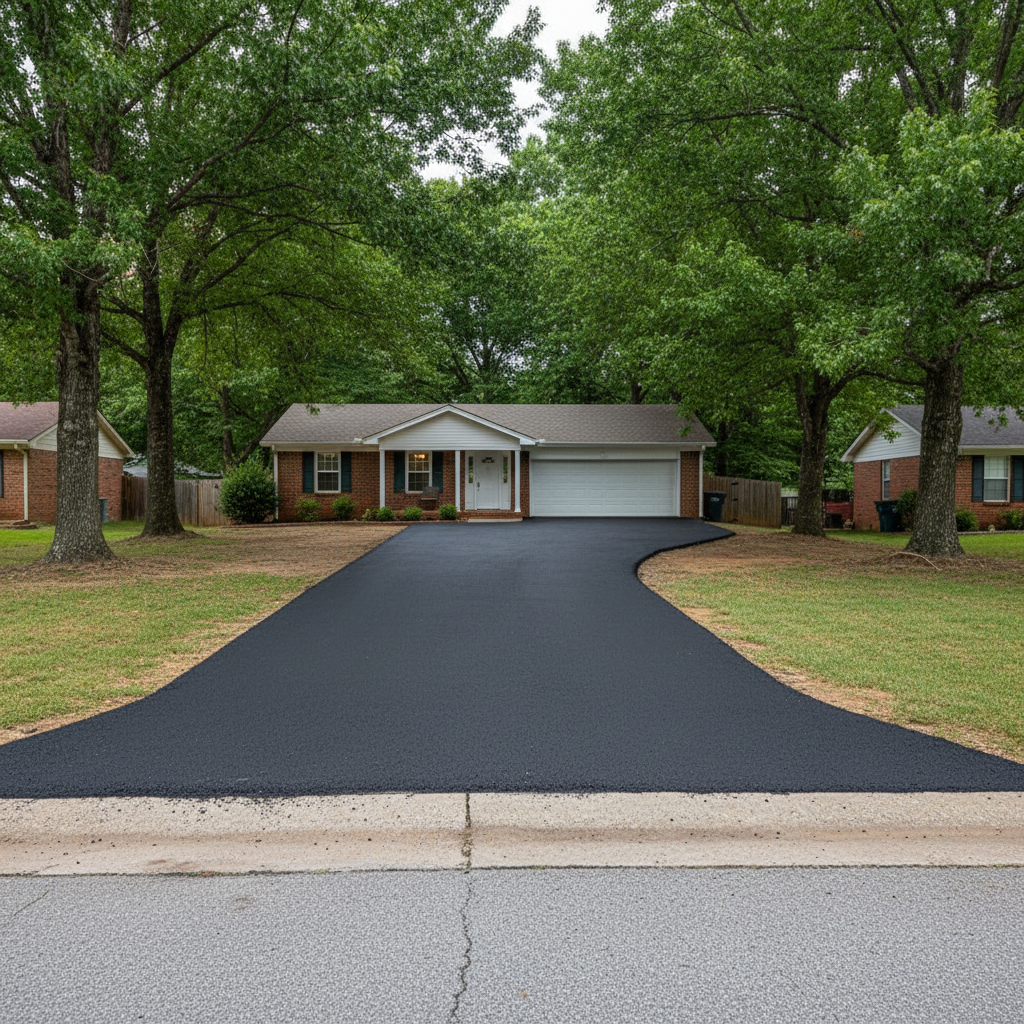
Alright, let's talk numbers. You're probably looking at a new asphalt surface, whether it's a driveway, a parking lot for your business, or even a private road. The first thing everyone asks is, "What's this going to cost me?" And while I can't give you an exact figure without actually seeing the job, I can certainly give you a pretty good idea of what to expect here in Bentonville and what really drives those prices.
What Makes Asphalt Paving Prices Go Up or Down?
There's no single, fixed price for asphalt paving. Anyone who tells you there is probably isn't being straight with you, frankly. A few key factors play a big role in the final cost. Here's what we usually look at:
- Project Size: This one's a no-brainer, right? A bigger area means more material, more people working, and more time. But it's not always a straight line. Sometimes, bigger projects actually get a slightly better price per square foot because we can be more efficient.
- Asphalt Depth: Are we putting down a standard 2-3 inches for a residential driveway? Or do you need a heavy-duty 4-6 inches for a commercial parking lot that sees a lot of truck traffic? More depth means more asphalt, which, naturally, costs more.
- Base Preparation: This is huge, absolutely critical. If your existing base is solid and just needs a little grading, that's one thing. But if we're tearing out old concrete, digging out soft soil (which we see a lot of in some of the older parts of Bentonville, especially near the creeks), and bringing in fresh aggregate, well, that's a whole different ballgame. A good, stable base prevents cracking and potholes down the road, so please, don't skimp here.
- Accessibility: Can our equipment easily get to the site? Is it a tight residential driveway with limited space to maneuver, or an open commercial lot? Tricky access can add to labor time and equipment needs, no doubt about it.
- Drainage Needs: Proper drainage is super important for how long your asphalt lasts. If the site requires extensive grading, French drains, or catch basins to direct water away, that'll be factored into the price.
- Material Costs: The price of crude oil directly impacts asphalt prices, and those tend to bounce around. We always use high-quality, fresh asphalt mix, but the market price changes.
- Permits and Regulations: For larger commercial jobs or certain residential projects, you might need city permits, and those come with their own fees.
Typical Cost Ranges for Asphalt Paving in Bentonville
Okay, let's get down to some actual numbers. Remember, these are averages for our area, and your specific project might fall outside these ranges depending on all those factors I just mentioned.
- Residential Driveways (New Installation): For a standard 2-3 inch thick asphalt driveway with a well-prepared base, you're generally looking at anywhere from $3.50 to $6.00 per square foot. So, a typical 600 sq ft driveway might run you $2,100 to $3,600. A larger, more complex 1,000 sq ft driveway could be $3,500 to $6,000.
- Commercial Parking Lots/Private Roads: These projects usually need thicker asphalt (4-6 inches) and more robust base work. Prices can range from $4.00 to $8.00+ per square foot. A 10,000 sq ft parking lot could cost $40,000 to $80,000 or more, depending heavily on the base and drainage requirements.
- Asphalt Resurfacing (Overlay): If your existing asphalt is in decent shape but just needs a new wearing surface (typically 1.5-2 inches thick), this is a more economical choice. Expect to pay around $2.00 to $4.00 per square foot. This assumes the existing base is stable and only minor repairs are needed beforehand.
Remember, these are ballpark figures. Always get a detailed quote tailored to your specific project, okay?
What Should Be Included in Your Paving Quote?
When you get a quote from Apex Paving Solutions, or any reputable contractor for that matter, it should be clear and detailed. Here’s what you should expect to see:
- Site Preparation: This covers grading, excavation (if needed), and putting in base material like crushed aggregate.
- Asphalt Material: The type, thickness, and amount of asphalt they'll use.
- Labor Costs: What it costs for the crew to do the work.
- Equipment Usage: Costs tied to bringing in and running the necessary paving equipment.
- Drainage Solutions: Any specific work to make sure water runs off properly.
- Cleanup and Disposal: What happens to the old material if it's being removed.
- Warranty: A clear statement about the warranty on materials and workmanship.
- Permits: If applicable, who's responsible for getting them and how much they cost.
If a quote is just a single number, ask for a breakdown. You really do need to understand what you're paying for.
How to Avoid Overpaying for Your Paving Project
Nobody wants to get ripped off, especially on a big investment like asphalt. Here are my tips to make sure you're getting a fair price and a quality job:
- Get Multiple Quotes: Don't just go with the first contractor you call. Get at least three detailed quotes from different reputable companies. This helps you compare not just the price, but also the scope of work.
- Check References and Reviews: See what other people in Bentonville are saying. A good contractor will have a solid track record, for sure.
- Understand the Scope: Make sure each quote is for the exact same scope of work. If one quote is significantly lower, it might be because they're cutting corners on base prep or using less material.
- Don't Be Afraid to Ask Questions: If something in the quote isn't clear, ask. A good contractor will be happy to explain everything.
- Beware of "Too Good to Be True" Prices: If a price is drastically lower than everyone else's, there's usually a reason. It could mean inferior materials, inexperienced labor, or hidden costs that pop up later.
- Verify Insurance and Licensing: Make sure the contractor is properly insured and licensed. You don't want to be liable if something goes wrong on your property, do you?
Getting a new asphalt surface is a significant investment, but when done right, it adds value and functionality for years. Do your homework, ask the right questions, and you'll end up with a smooth, durable surface that you won't regret.